What's the Difference Between Speed Rating and Load Index? And How Do You Choose the Right One for Your Car?
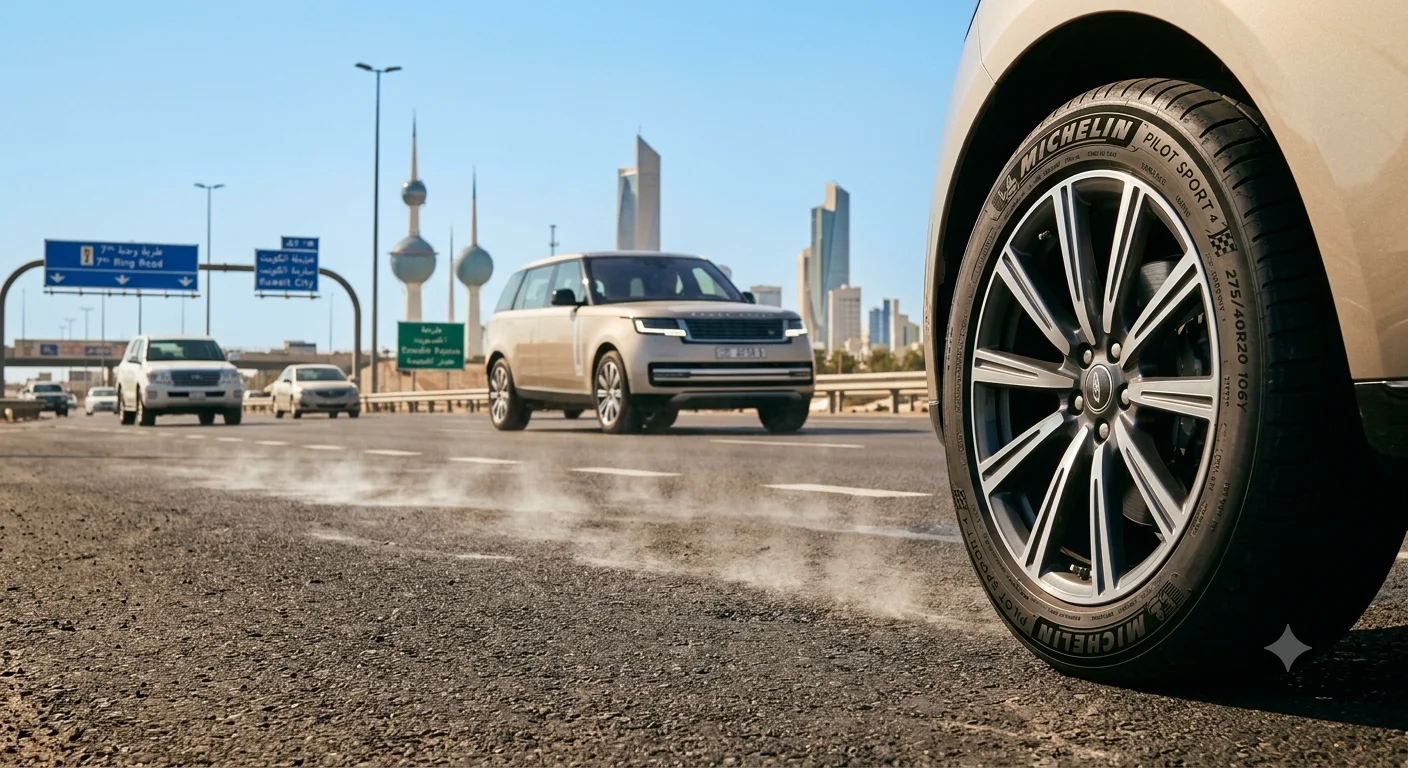
When it's time to change your car's tires in Kuwait, your attention usually goes straight to the tire's look or brand. But have you ever stopped to look at those small numbers and letters printed on the tire's sidewall? Among these codes, two stand out: the speed rating and the load index — think of them as the tire's ID card, defining exactly how safe and suitable it is for your car.
Under Kuwait's summer heat, and on fast roads like the Sixth and Seventh Ring Roads, a tire being new isn't enough to make it safe. Here's a simple, engaging breakdown of both indicators, and how to pick what truly fits your car.
First: What Is the Load Index?
Imagine you're heading out on a family trip to Khiran or Jahra, and your car is packed with passengers and luggage. The load index is simply the number that tells you the maximum weight a single tire can safely carry at its recommended pressure.
This index typically ranges from 70 to 125 (for example, 91, 95, or 104). To understand what a number actually means, you need to check standardized international load index tables. For instance:
Load index 91 means the tire can carry up to 615 kilograms.
Load index 95 means it can carry up to 690 kilograms.
Load index 104 (common on SUV and luxury car tires) means it can carry up to 900 kilograms.
Why does this matter in Kuwait? As temperatures rise, the air inside the tire expands, increasing internal pressure. If a tire is already running close to its maximum rated load in Kuwait's extreme heat, the risk of tire stress or failure goes up. So if you drive a large SUV or a family van that regularly carries heavy loads, the load index deserves your full attention.
Second: What Is the Speed Rating?
This is the letter that immediately follows the load index (such as S, H, V, or W). This letter doesn't mean you're meant to drive at that speed — it indicates the maximum speed the tire can sustain without losing structural integrity or performance.
For example:
S means a maximum speed of 180 km/h.
H means a maximum speed of 210 km/h.
V means a maximum speed of 240 km/h.
W means a maximum speed of 270 km/h.
Why does this matter in Kuwait? You might think: "I never go above 120 km/h on the roundabouts, so why would I need a tire rated for higher speeds?" The answer lies in the tire's engineering. A tire built for higher speeds is typically made with a firmer rubber compound and a stronger internal structure (especially in reinforced XL variants), giving it better stability and higher heat resistance — which translates into a smoother, more composed ride even at everyday speeds on roads like King Fahad Highway.
A real-world example: Among the tires currently available in the Kuwaiti market is a 245/50R18 tire from Tracmax, rated 104W — meaning it can carry up to 900 kilograms per tire and withstand speeds up to 270 km/h. It's also an XL (reinforced) construction, designed for passenger vehicles that need extra stability.
Third: How Do You Choose the Right One for Your Car in Kuwait?
Don't pick these ratings randomly or based on a friend's suggestion. Instead, follow these practical steps:
1. Check the driver's door placard: Your car's manufacturer has already specified the correct tire size, along with the required load index and speed rating (for example: 235/60 R18 100H). This is your first and most important reference point.
2. The golden rule of choosing:
Load index: Never choose a lower load index than what's specified on your car's placard. You can go higher (say, 102 instead of 100) for extra safety margin, especially if your car frequently carries additional weight.
Speed rating: It's best not to go below the rating recommended by the manufacturer.
3. Match your actual needs with what's available in the market: When browsing tires available in the Kuwaiti market through trusted platforms like b2b.com.kw, you'll find each tire's specifications clearly listed, including both the load index and speed rating. The platform, for example, carries tires from brands such as Tracmax, Firestone, Roadstone, and Zextour, in a range of sizes and ratings suited for family sedans as well as SUVs, with clear technical details for each product to help you match it correctly to your car's placard.
4. Keep all four tires consistent: Make sure all four tires carry the same speed rating and load index, or at the very least, place the tires with the higher rating on the rear axle for better overall stability.
In Conclusion
The speed rating and load index aren't just decorative numbers — they're your first line of defense in protecting yourself and your family on the road. In Kuwait, where extreme heat adds an extra layer of stress on rubber and compressed air, sticking to these ratings — and even upgrading the load index slightly when needed — is a genuine investment in your safety and comfort.
Next time you're thinking about changing your car's tires, don't just ask about the "size." Ask: "What speed rating and load index does my car actually need?"