What Are the Signs That Your Car's Cooling System Needs Urgent Inspection?
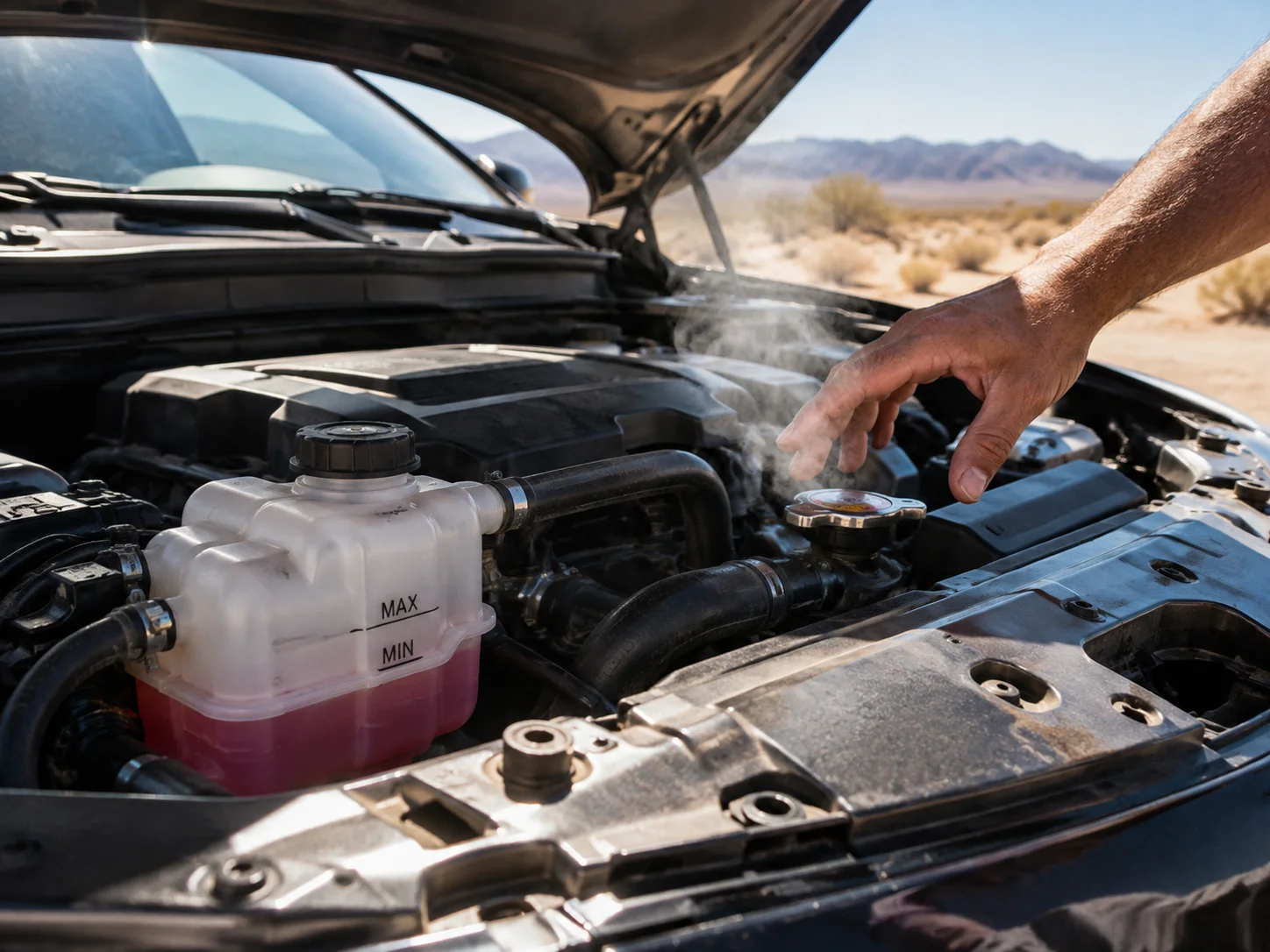
Your car may be running normally, and then suddenly you notice the temperature gauge climbing or the coolant level dropping repeatedly. These signals shouldn't be ignored, especially when driving in Kuwait's hot climate, because the car's cooling system is responsible for keeping the engine within its proper operating temperature.
So when exactly does your car's cooling system need urgent inspection?
1. The engine temperature gauge rises above normal
One of the clearest signs is the engine temperature gauge climbing above its normal level, or a temperature warning light appearing on the dashboard. This can be caused by low coolant, a radiator problem, a faulty thermostat, a malfunctioning cooling fan, or a failing water pump.
If the gauge reaches the red zone, don't keep driving as if it's a minor issue — continued overheating can lead to costly engine damage.
2. Coolant level keeps dropping
It's normal to check your coolant level from time to time, but if you find yourself topping it up repeatedly, that's not routine maintenance — it may be a sign of a leak.
Leaks can occur from a hose, the radiator, the water pump, the system cap, or one of the connections. Don't just keep refilling the coolant each time; look for the underlying cause of the loss.
3. You notice a puddle of fluid under the car
Finding colored fluid under the front of the car after it's been parked may indicate a coolant leak. Fluid colors can vary between vehicles, so don't rely on color alone to identify the type of fluid.
If you notice a leak occurring repeatedly, having the cooling system inspected is far better than waiting until the engine overheats.
4. Steam coming from under the hood
If you see steam coming from the engine area, the coolant may have reached boiling point or started leaking under high pressure.
In this case, pull over in a safe spot and turn off the engine. Do not attempt to open the radiator cap or the pressurized coolant reservoir while the engine is hot — the hot fluid can spray out and cause serious injury.
5. An unusual sweet-smelling odor
A sweet or distinctive smell around the engine after driving may indicate a coolant leak. The leak might be small enough that you don't see an obvious puddle under the car, so it's best to check the hoses, connections, and fluid level.
6. Coolant appears cloudy or has sediment
Coolant should remain in good condition and free of visible sediment. The appearance of cloudiness, rust, or deposits may mean the fluid is old or contaminated, and that the system needs inspection — and possibly cleaning and fluid replacement according to the manufacturer's instructions.
7. Boiling or gurgling sounds after driving
Boiling or gurgling noises coming from the radiator area or coolant reservoir shouldn't be dismissed. They may be linked to air trapped in the system, a problem with coolant flow, or a fault in one of the system's components.
What products might you need for cooling system maintenance?
Among the products available on B2B, you'll find Radiator Coolant Concentrate 500ML, a glycol-based concentrated coolant designed to help protect the cooling system from heat, corrosion, and rust. There's also Gladiator GT37 Radiator Cleaner, 354ml, for use as part of a radiator cleaning process.
But keep in mind: don't choose a coolant based on color alone, and don't mix different types randomly. Check your vehicle's manual and confirm the required specification and concentration before use.
Conclusion
Don't wait until your car's temperature spikes sharply before paying attention to the cooling system. Low fluid, leaks, a rising temperature gauge, steam, unusual smells, or changes in coolant condition are all signals worth having checked.
And with Kuwait's summer heat, keeping the car's cooling system in good condition isn't just extra maintenance — it's an important step in protecting the engine and reducing the chance of sudden breakdowns on the road.