Original (OEM) vs. Aftermarket Car Parts: What's the Difference?
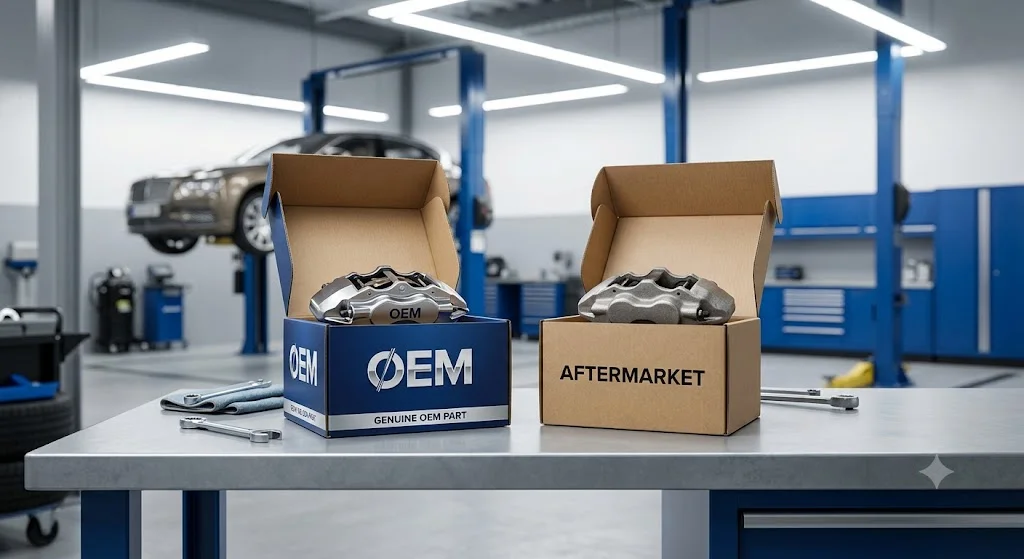
When your car needs a part replaced, you're usually faced with two options: original parts (OEM) or aftermarket parts. And that's where the question begins: Is original always better? Does aftermarket automatically mean lower quality?
The answer isn't that simple. The right choice depends on the type of part, its quality, and how well it matches your car. Here's a clear breakdown to help you make the right decision.
First: What Are OEM Parts?
The term OEM – Original Equipment Manufacturer in the automotive market usually refers to parts made to the exact specifications set by the car's manufacturer. It's worth noting that the carmaker doesn't necessarily manufacture every part itself; it often relies on specialized suppliers to produce certain components. What defines OEM parts is that they're designed to match the specific vehicle's specifications in terms of dimensions, fit, and performance.
This makes OEM parts a reassuring choice when your priority is getting a part that matches, as closely as possible, what the car originally came with from the factory.
Second: What Are Aftermarket Parts?
Aftermarket parts are produced by companies other than the car's manufacturer and sold on the market as compatible alternatives for various models.
But the word "alternative" doesn't automatically mean lower quality. The market includes well-known companies that offer very good products, while lower-quality products also exist. So a part shouldn't be judged simply because it's aftermarket.
What's the Real Difference Between OEM and Aftermarket?
The differences can be summarized in a few key points:
Compatibility: OEM parts are designed according to the original vehicle's specifications, making it more straightforward to find the right part. Aftermarket parts, on the other hand, require carefully verifying the part number, size, specifications, and compatible models.
Price: Aftermarket parts are often available at a wider range of price points, while original parts tend to be pricier due to branding and the manufacturer's own distribution channels.
Options: The aftermarket offers a large number of brands and quality tiers, giving you more freedom to choose — but it also means you need to carefully check the brand's reputation and product quality.
Quality: It's not accurate to say every OEM part is excellent and every aftermarket part is inferior. What matters is whether the aftermarket part meets the required specifications for the vehicle, especially for parts related to performance and safety. When replacing components like brakes, for example, it's important to use parts that meet or exceed the original equipment specifications.
When Is an Original Part the Better Choice?
OEM tends to be the better option for parts that are highly sensitive or heavily dependent on precise calibration and fit, or when you want to keep your car as close as possible to factory specifications.
Compatibility and quality become especially important for parts like electronic components, sensors, and safety systems, where using poor-quality or non-matching parts can cause problems far more costly than the money saved on the part itself.
And When Can You Choose Aftermarket?
Aftermarket parts can be a practical choice for many maintenance and consumable items, as long as you choose a trusted brand and the correct specifications.
For example, B2B Auto in Kuwait offers Denso wiper blades in several sizes such as 18, 22, 24, and 26 inches, along with multiple categories of car batteries and products from various brands. In cases like this, choosing the brand alone isn't enough — you also need to make sure the size and specifications match your car before purchasing.
How Do You Choose the Right Part for Your Car?
Before buying any part, don't let price alone be the deciding factor. Start by checking your car's manual or the original part number, then verify the product's specifications and how well it matches your car type, model, and manufacturing year.
It's also best to buy parts from a trusted source, and to avoid products of unknown origin or ones with unclear information.
If your car is still under warranty, be sure to check the warranty terms with your dealer or the manufacturer in Kuwait before making any modifications or installing different parts.
Conclusion
There's no single answer that fits every car and every part. OEM parts give you a closer match to factory specifications, while aftermarket parts offer more options in terms of brands, prices, and specifications.
The most important rule is this: Don't choose between original and aftermarket based on the label alone — choose the part that matches your car's specifications and comes from a trusted brand and source.
With a wide range of car parts and automotive products available at B2B Auto Kuwait, you can compare products and specifications and choose what suits your car and your needs — without compromising on quality.