LED Car Bulbs: Are They Worth the Upgrade? And What's the Difference from Halogen?
Many drivers face the same question: is switching from traditional halogen bulbs to LED actually worth the cost? — especially with this technology becoming standard in newer cars and heavily featured in ads. In this article, we break down the real difference between the two technologies and when upgrading to LED makes sense, so you can decide based on solid facts rather than just appearance.
How Does Each Technology Work?
Halogen bulbs work by heating a tungsten filament inside halogen gas until it glows and produces light — the traditional technology used in most cars for decades. LED bulbs (Light-Emitting Diodes), on the other hand, work on a completely different principle: an electric current passes through a semiconductor chip and produces light directly, without the need to heat a metal filament. This fundamental difference in how they operate explains the major gaps in performance and lifespan between the two.
The Difference in Brightness and Clarity
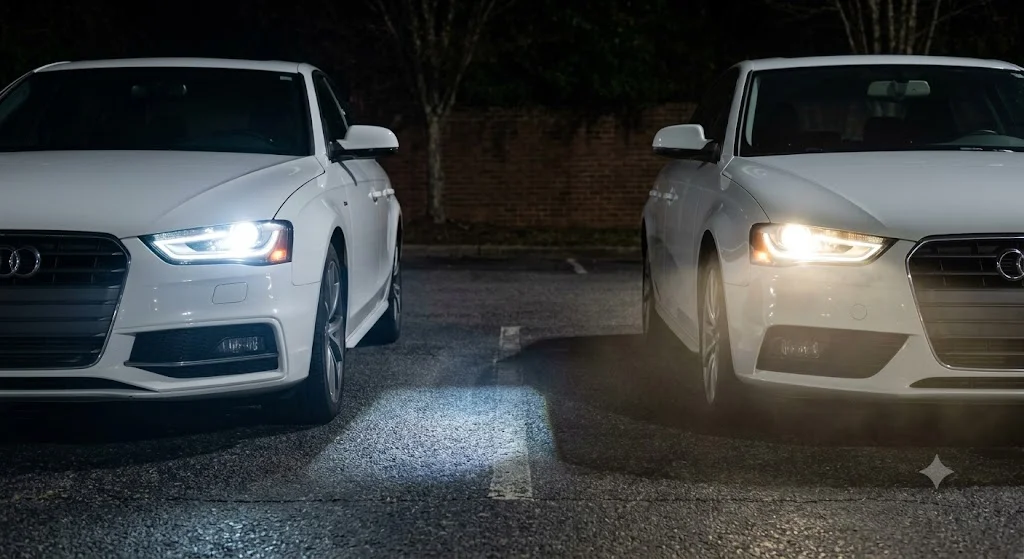
One of the biggest advantages of LED is that it produces a whiter, clearer light closer to natural daylight, significantly improving night visibility compared to the warm yellow tone of halogen bulbs. LEDs also have an almost instant response time, which matters especially for rear lights and brake signals — the bulb lights up a fraction of a second faster than halogen, a difference that can make a real impact in alerting the driver behind you.
Lifespan and Energy Consumption
This is where LED has its biggest advantage. While a halogen bulb typically lasts between 500 and 1,000 hours of use, quality LED bulbs can last 15,000 to 30,000 hours or more — meaning they can last for years without frequent replacement. LEDs also consume noticeably less electrical power to produce the same or even higher brightness, reducing the load on the car's battery and electrical system.
Are There Any Downsides to LED Technology?
Despite its advantages, there are a few things worth knowing before switching:
Heat output: LED bulbs generate heat at their base rather than at the front, so they require cooling systems (small fans or heat sinks) to maintain their lifespan — particularly important in Kuwait's hot summer climate.
Compatibility with the headlight lens: not every headlight housing is originally designed to work efficiently with LED. Older lenses built for halogen bulbs may produce uneven light distribution or glare that bothers oncoming drivers if the installation doesn't match the original specifications.
Quality makes a big difference: there's a huge gap between a certified, spec-compliant product and a cheap, unreliable one, which can cause electrical issues or unsafe, non-compliant lighting on the road.
Is It Worth Switching from Halogen to LED?
In most cases, yes — especially if you frequently drive at night or on poorly lit roads outside the city. The benefits are clear in terms of visibility, safety, and longevity, while the extra upfront cost is offset over time by fewer replacements and lower energy consumption. That said, the key condition is choosing an LED kit that matches your car's original bulb size (such as H1, H4, H7, H11, or 9005/9006) from a trusted brand that ensures proper light distribution without blinding oncoming traffic.
How to Choose the Right Kit for Your Car
Before buying, make sure you know the exact bulb base/fitment used in your car, as it varies by model. It's also worth considering the appropriate brightness level (Lumens), since more brightness isn't always better if it doesn't match your headlight lens design.
For those looking for reliable options in the Kuwaiti market, b2b.com.kw offers a range of LED headlight kits from the Rhine brand, available in multiple fitments covering most car types, including H1, H3, H4, H7, H11, and 9005/9006, with different brightness levels (such as R45K, R65K, R85K, and R130K) to suit different needs. The store also offers fast delivery across Kuwait to make the purchasing and installation process easier.
Conclusion
Switching to LED isn't just a trend or a cosmetic upgrade — it's a practical investment that improves night visibility, extends bulb lifespan, and reduces the load on your car's electrical system. The key is making sure your choice is based on the correct fitment and reliable quality, not just the lowest price, so you get the full benefit without running into issues down the road.