Jump Starters: When Do You Actually Need One?
You turn the key or press the start button in the morning, and instead of your engine roaring to life, all you hear is a rapid clicking sound — or nothing at all — because the battery is too weak. This is where a jump starter comes in, one of those emergency tools that can save you from waiting for another car or calling for roadside assistance.
But does every driver in Kuwait need to carry a jump starter? And how do you choose the right one? Here's a simple breakdown.
What Is a Jump Starter?
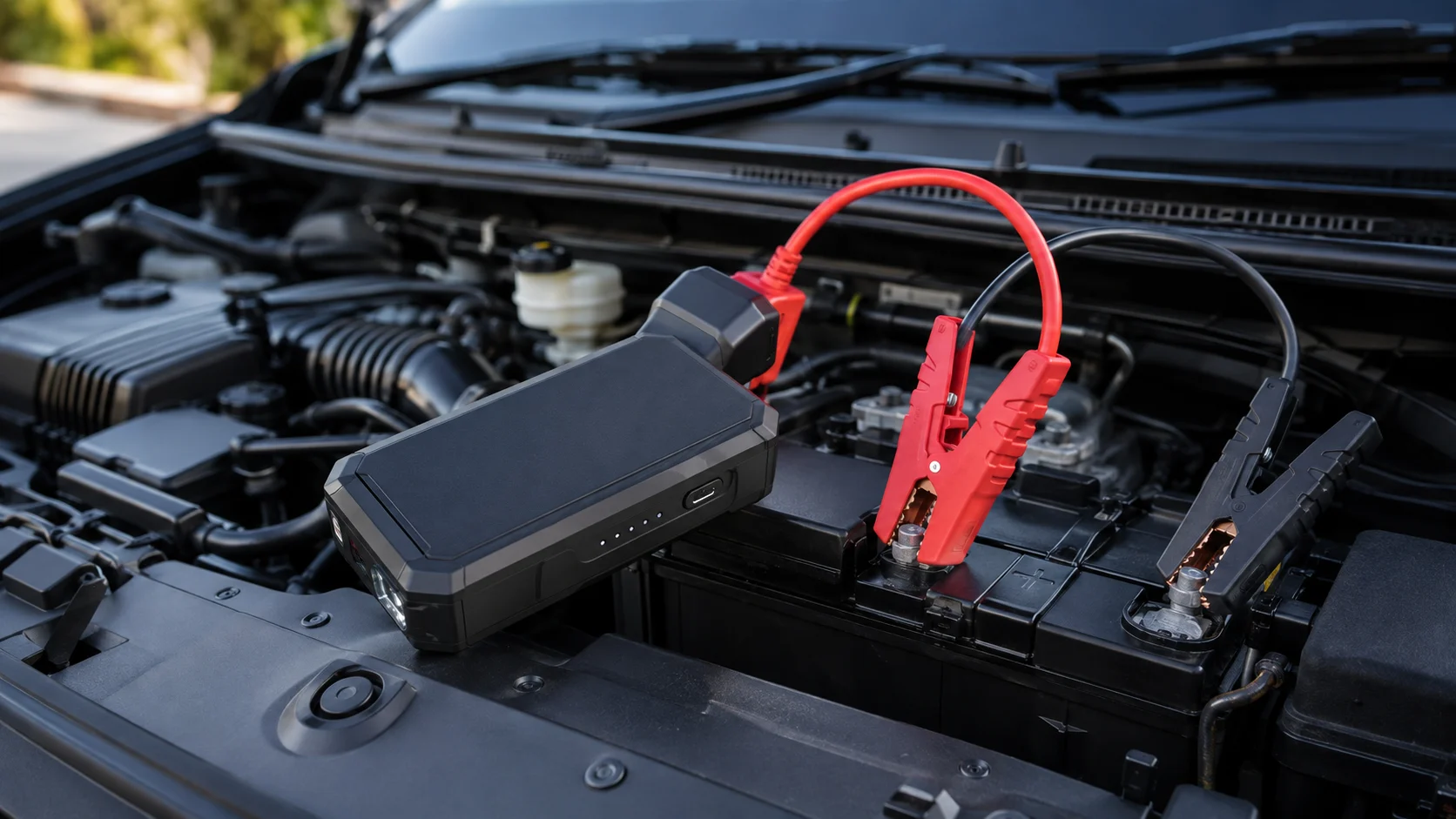
A jump starter is a portable device with a built-in battery capable of delivering a high burst of current for a short period, helping a weak car battery start the engine.
It differs from traditional jumper cables in one key way: you don't need another car to use it. All you have to do is connect the clamps to the battery terminals correctly, then start the car following the device's instructions.
Many modern jump starters also combine several functions in one unit, such as a tire inflator, portable device charger, and emergency lighting.
When Do You Actually Need a Jump Starter?
Having one on hand becomes especially useful in several situations:
When the battery suddenly weakens and the car won't start.
If the car is left parked for long periods.
When traveling long distances or driving in areas where quick roadside help isn't easily available.
If an electrical system was accidentally left running while the engine was off, draining the battery.
During Kuwait's extreme heat, which can accelerate battery degradation over time.
For these reasons, a jump starter in Kuwait can be a practical addition to a car's emergency kit, especially for daily drivers or frequent travelers.
But a Jump Starter Isn't a Cure for a Damaged Battery
It's important to understand this: successfully starting your car with a jump starter doesn't mean the battery problem is solved.
If you find yourself needing to use a jump starter repeatedly, it may be a sign that the battery itself is nearing the end of its life, or that there's an issue with the alternator or charging system.
So if the problem keeps recurring, it's best to have the battery and charging system checked rather than relying on the jump starter every time.
How to Choose the Right Jump Starter for Your Car
Don't just go by the device's size or the biggest number printed on the box. Focus on a few key factors instead:
1. Compatibility With Your Car
First, make sure the device is designed to work with your car's system voltage and the engine type and size specified in the manufacturer's instructions.
2. Starting Current
Larger engines typically need higher starting power, so check the maximum gasoline or diesel engine size the device supports, rather than choosing based on capacity alone.
3. Safety Protections
Look for a device equipped with protections such as reverse polarity, short-circuit, and overcurrent protection.
4. Extra Functions
If you want an all-in-one emergency tool, it may be worth choosing a device that combines jump-starting with tire inflation, lighting, and phone charging.
Among the options available at B2B AUTO, for example, is the Jump Starter & Air Pump HZ009C – 3-in-1 Emergency Car Tool, which combines jump-starting with an air pump and additional emergency functions. The category also includes the Jump Starter & Air Compressor 16000mAh – Multi-Function Emergency Car Tool.
Among the more feature-packed options is the NEBO Assist Air Jump Starter 4-in-1, while the NEBO ULTIMATE Multi-Function Battery combines a claimed peak starting power of 1500 amps with an air compressor that reaches up to 130 PSI, plus lighting and multiple charging ports.
How to Use a Jump Starter Safely
Even though most modern devices are easy to use, always follow both the device's and the car's manuals.
Generally, the process involves turning off the car and all electrical devices first, connecting the positive clamp to the positive terminal as instructed, connecting the other clamp to the point specified by the manufacturer, and — after confirming the connections are correct — turning on the device and attempting to start the engine.
Never use the device if the battery is damaged, swollen, or leaking fluid, and don't exceed the number of start attempts or duration specified by the manufacturer.
Don't Forget to Charge the Jump Starter
The worst time to discover your jump starter is empty is exactly when your car battery dies.
So check the device's charge level regularly and recharge it according to the manufacturer's instructions. And because of Kuwait's high temperatures, avoid leaving lithium-battery devices in extremely hot places or under direct sunlight, and follow the manufacturer's recommended storage temperatures.
Is It Worth Buying a Jump Starter?
For many drivers in Kuwait, yes. It's not something you use every day, but it can become one of the most important tools you own the moment you actually need it.
If you drive long distances, use more than one car, or simply want to be prepared for a battery issue without relying on another car being nearby, keeping a jump starter suited to your car alongside a tire inflator and basic safety gear is a practical choice.
Most importantly, don't think of a jump starter as a substitute for battery maintenance. It's an emergency tool that helps you start your car — not a fix for a battery or charging system problem.