How to Choose the Right Car Charger for Your Device
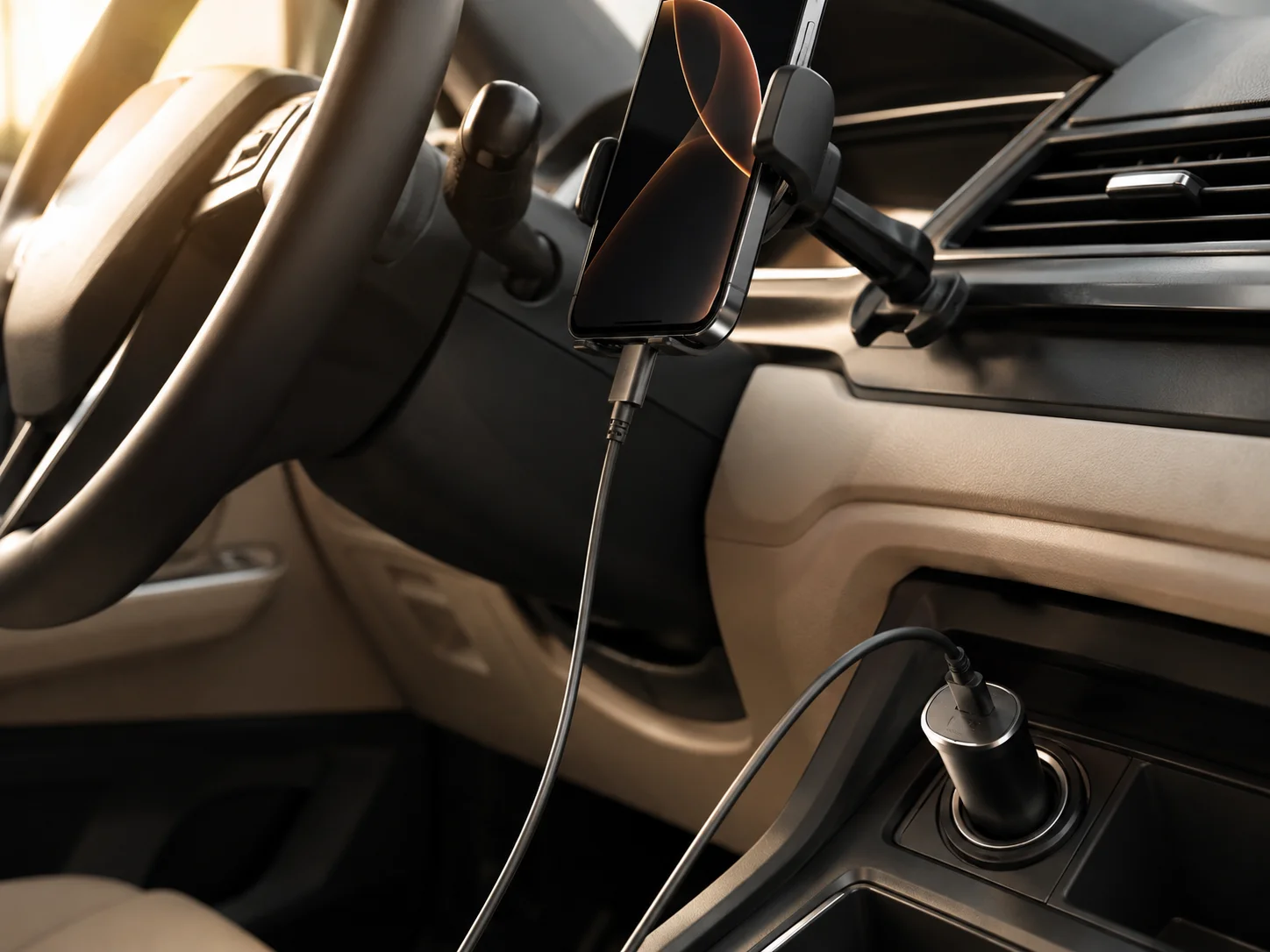
The phone has become an essential part of nearly every trip — we use it for navigation, calls, apps, and music. That's why having a suitable car charger is no longer just a nice extra, especially on long drives and with constant phone use in the car.
But it's not enough to just grab any charger and plug it into the car's port. There are real differences in charging power, port type, cable, and fast-charging technology. So how do you pick the right charger for your device?
1. Know the Charging Power Your Device Supports
The first thing to look at is the power rating in watts (W) that your phone or device can actually accept.
If your phone supports fast charging at, say, 18 or 20 watts, using a lower-power charger will make it charge more slowly. On the other hand, choosing a higher-power charger doesn't necessarily mean your phone will draw all that power — with technologies like USB Power Delivery (USB-PD), compatible devices negotiate the right amount of power during charging.
So the best approach is to first find out the maximum wired charging power your device supports.
2. Check the Port Type: USB-C or USB-A?
USB-C has become the most widely used port in modern phones and devices, and it also supports higher speeds and power levels when paired with a compatible charger and cable.
Before buying, look at the cable you're using:
If your device uses USB-C, a USB-C car charger is generally the most practical choice.
If you're using an older device or cable, check the port type before buying the charger.
And don't forget — the cable itself is part of the charging system. A poor-quality cable can limit charging speed even if the charger itself is capable of delivering more power.
3. Choose the Power Level Based on How You Use It in the Car
If you're just charging your phone while driving, a power level like 18 watts may be plenty for many everyday uses, depending on what your phone supports.
But if you're charging devices that need more power, or you want a charger that gives you more flexibility across compatible phones and devices, a higher-power charger may be the better choice.
Among the options currently available at B2B Auto in Kuwait are an 18W car charger with a USB-C cable from OtterBox, as well as an 18W version with a USB-C to Lightning cable, and a 60W USB Type-C car charger from Scosche PowerVolt.
Here's the key: don't pick 60W over 18W just because the number is bigger — choose based on what your device actually needs and what it's compatible with.
4. Wired or Wireless Charging?
Wired charging is generally the better choice for efficiency and speed, while wireless charging offers a more convenient experience for frequent getting in and out of the car, especially if your phone supports wireless charging.
B2B Auto also offers options like the AutoCharge wireless car charger for those who prefer to deal with fewer cables while driving.
Just keep in mind that wireless charging speed depends on the charger's power, phone compatibility, and how well the device is aligned with the charging pad.
5. Don't Let Price Be the Only Factor
A charger is something you use every day in your car, so look for build quality, connection stability, compatibility with your device, and support for the right charging standards.
Low-quality chargers and cables can lead to slow charging or frequent disconnections, which is why it's better to go with a product that has clear specifications and comes from a trusted source.
Bottom Line: What's Right for You?
Choosing the right car charger starts with your device — not with the highest number printed on the box.
Check the charging power your phone supports, the port type, the fast-charging technology, and the cable you're using, then pick the charger that meets those requirements.
For everyday use, an 18W charger may be enough for many devices, while higher-power options like 60W give you more flexibility across compatible devices. And if convenience matters most to you, a wireless car charger might be the option that best fits how you use your phone.