How Does a Car's Braking System Work? A Simple Guide
When you press the brake pedal, it might seem simple: you press, and the car stops. But behind this quick motion, a car's braking system works through an interconnected set of hydraulic, mechanical, and electronic components to convert the pressure from your foot into friction force capable of slowing and safely stopping the car.
With Kuwait's high temperatures, traffic congestion, and frequent stop-and-go driving, understanding how the brakes work and recognizing signs of trouble helps protect your safety and your car's safety.
What happens when you press the brake pedal?
In most modern cars, the braking process goes through several sequential stages within fractions of a second:
You press the brake pedal: The process begins with the force your foot applies.
The brake booster kicks in: The Brake Booster amplifies the force you apply, so you don't need to press extremely hard with your foot to stop the car.
The force converts into hydraulic pressure: The Master Cylinder pressurizes the brake fluid inside the lines.
The pressure reaches the wheels: The pressurized brake fluid travels to the brake mechanisms at each wheel.
Friction occurs: The pads press against the discs in a disc brake system, converting the car's kinetic energy into heat and gradually reducing wheel rotation until the car stops.
Simply put: your foot generates the force, the brake fluid transmits it, and the pads and discs convert it into friction that slows the car.
What's the difference between pads and discs?
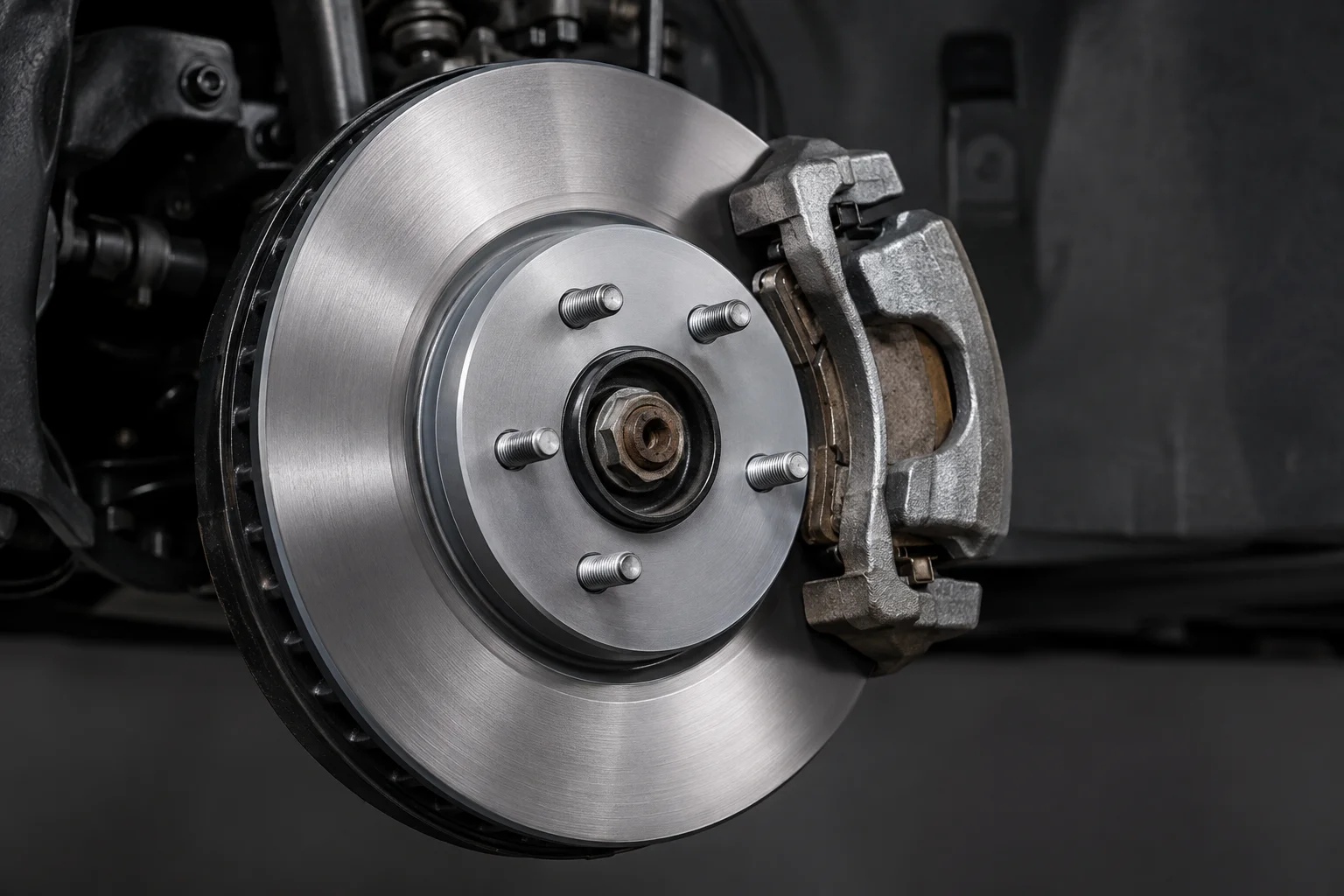
Brake Pads are pieces made of friction materials mounted inside the caliper. When you press the brakes, the Caliper pushes the pads against the disc.
The Brake Disc/Rotor is the metal disc that rotates with the wheel. When the pads make contact with it, its rotation speed decreases, and consequently, the car's speed decreases.
This is why pads and discs wear out with use, especially with hard and frequent braking or driving at high speeds followed by repeated stops.
And what's the role of brake fluid?
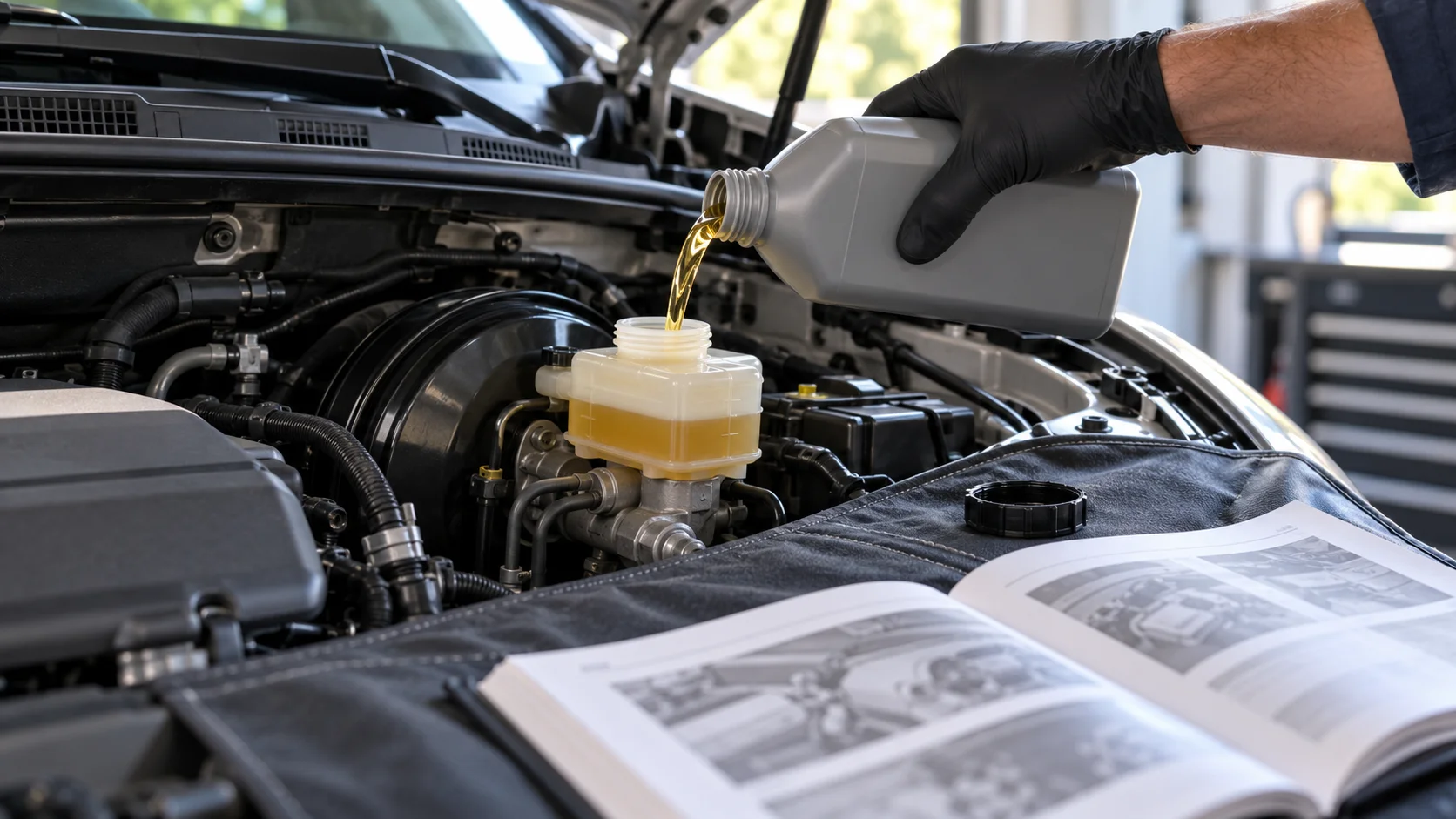
Brake fluid is an essential element of the hydraulic system; it's what transmits pressure from the master cylinder to the brakes at the wheels. If its level drops due to a leak, or its properties deteriorate, the system's performance may be affected, and the cause should be inspected rather than simply topping up the fluid.
Many glycol-based brake fluids absorb moisture over time, which can lower their boiling point and increase the likelihood of reduced braking efficiency under extreme heat conditions.
B2B Auto currently offers Gladiator DOT 3 and Gladiator DOT 4 brake fluid, along with Gladiator GT16 brake cleaner. However, when choosing brake fluid, you should always adhere to the specification set by your car's manufacturer and not choose a different type just because its rating is higher.
What role does the ABS system play?
During hard braking, one of the wheels may lock up and stop rotating while the car is still moving. This is where the Anti-lock Braking System (ABS) comes in.
Wheel speed sensors monitor the rotation of each wheel, and when the system detects that a wheel is about to lock, it rapidly and automatically adjusts brake pressure to help prevent lockup and maintain the driver's ability to control the car during braking.
You may feel a pulsing or vibration in the brake pedal while ABS is active during a hard stop, and this can be normal when the system engages. In this case, you don't need to pump the pedal repeatedly; maintain steady, appropriate pressure during emergency braking.
What signs indicate the brakes need inspection?
Don't wait until the car becomes difficult to stop. Among the most notable signs that call for inspecting the car's braking system:
A squealing or metallic grinding sound when braking.
Noticeable vibration in the brake pedal or steering wheel while stopping.
A noticeable increase in stopping distance.
A feeling that the brake pedal is soft or spongy, or sinks more than usual.
The car pulling to one side during braking.
The brake or ABS warning light appearing on the dashboard.
Especially if there's a sudden change in how the pedal feels or a clear drop in braking performance, it's best not to delay inspection.
Does Kuwait's heat affect the brakes?
The primary heat that brakes face comes from friction during deceleration, but driving in Kuwait's hot climate, combined with traffic congestion, frequent stop-and-go driving, and highway driving, can increase the thermal load on the car's components.
That's why making sure the pads, discs, brake fluid, and tires are in good condition matters. Even the best braking system can't exceed the limits of tire grip on the road; tire condition directly affects the car's ability to make use of braking force. NHTSA notes that ABS performance itself remains limited by the amount of traction available between the tire and the road surface.
Conclusion
A car's braking system works as an interconnected chain that starts with the brake pedal, moves through the brake booster and master cylinder and brake fluid, and reaches the caliper, pads, and discs. ABS acts as an additional layer to help prevent wheel lockup and maintain control during hard braking.
So don't treat the brakes as just pads to be replaced when you hear a noise. Any change in brake sound, pedal feel, or stopping distance deserves inspection, because the safety of the braking system is one of the most important factors in safe driving on Kuwait's roads.