Engine Coolant: When to Change It and What Happens If You Neglect It?
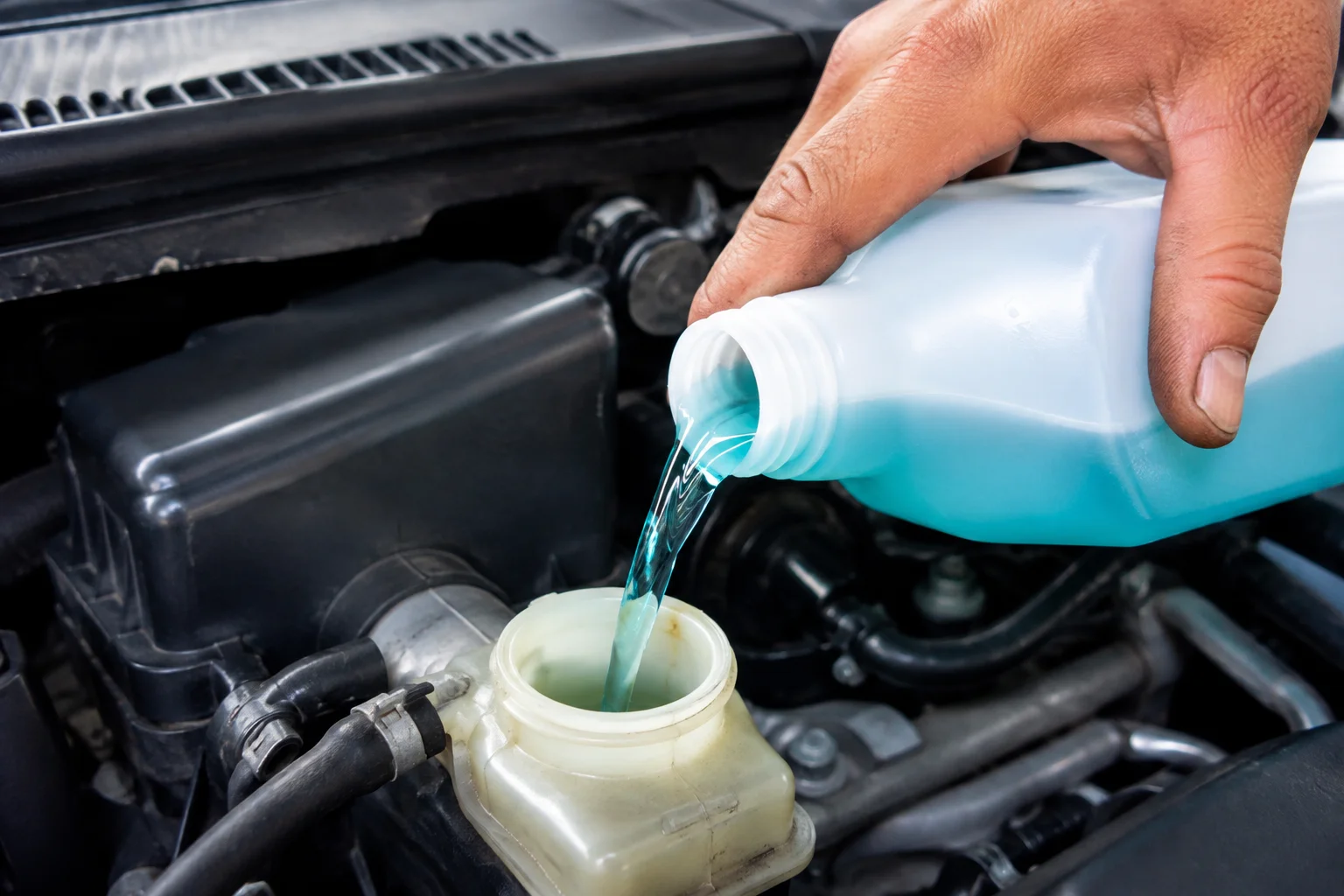
With rising temperatures in Kuwait, a car's cooling system works under significant strain to keep the engine within a normal operating temperature range. This is where engine coolant comes in; it's not just water inside the radiator, but a fluid specifically designed to help transfer heat and protect the cooling system's components from rust and corrosion.
But the question that matters to every driver is: When should coolant be changed? And what can happen if it's neglected?
What Does Engine Coolant Do?
Coolant circulates between the engine and the radiator, absorbing heat and carrying it away from the engine. Proper coolants also contain additives that help protect the metal parts of the system from corrosion, rust, and scale buildup.
Over time and with use, some of these protective additives lose their effectiveness. That means it isn't enough for the coolant level to simply look fine — the replacement interval also needs to be followed. Vehicle manufacturer guidelines indicate that replacement intervals vary depending on the car and the type of coolant used.
When Should You Change Engine Coolant?
There's no single interval that applies to every car. Some traditional coolants need replacement over a shorter period, while Long Life or Extended Life types can last considerably longer.
For example, some Toyota maintenance schedules recommend the first coolant change at 100,000 miles or 120 months for certain models, and then every 50,000 miles or 60 months after that. This is simply an example illustrating how much intervals can vary — not a rule that applies to every vehicle.
For this reason, the best reference is always your vehicle's owner's manual and its approved maintenance schedule.
Also, don't wait for the scheduled change date alone if you notice:
Coolant level dropping repeatedly.
Engine temperature gauge reading higher than usual.
Leaks or fluid traces under the car.
An unusual sweet-smelling odor around the engine.
Visible rust or sediment in the expansion tank.
What Happens If You Neglect Changing the Coolant?
As coolant ages and loses part of its ability to resist corrosion, problems can gradually begin developing inside the cooling system.
Some of the most notable potential consequences include:
1. Engine Overheating
If the coolant level drops due to a leak, or if the cooling system becomes unable to perform its job efficiently, engine temperature can rise — especially while driving in hot weather or heavy traffic.
2. Corrosion and Rust Inside the System
Neglecting proper coolant can allow rust and corrosion to form inside the radiator, water pump, and cooling passages, which over time may lead to leaks or blockages.
3. Damage to the Water Pump or Radiator
Using an unsuitable coolant, or mixing incompatible types, can reduce corrosion protection and cause problems in the cooling system's components. Gates recommends using the coolant type specified by the vehicle manufacturer and avoiding mixing incompatible types.
4. Costly Engine Failures
Continuing to drive with an overheating engine can escalate into damage far more expensive than the cost of timely coolant replacement and system maintenance.
Can You Just Use Any Type of Coolant?
No. Color alone is not a sufficient criterion for choosing the right coolant.
Coolants differ in their formulation and the additive technologies used, so it's essential to confirm the specification required by your car's manufacturer. It's also best not to mix different types unless their specifications confirm compatibility.
If the product is a concentrate, don't assume it can be poured directly into the system; you must follow the dilution ratio printed on the package and the specification required for your vehicle. Distilled or demineralized water is usually used when dilution is required.
Among the products available is a 500ml concentrated radiator coolant, a glycol-based concentrated coolant designed to help protect against overheating, corrosion, rust, and sediment buildup.
Before using it — or any other coolant — first make sure its specifications are compatible with your car and confirm the required dilution method.
An Important Tip for Drivers in Kuwait
Check the coolant level periodically when the engine is completely cold, and never open the radiator cap or cooling system while the engine is hot — the system may be under pressure, and extremely hot fluid could spray out.
If you find yourself topping up coolant repeatedly, don't treat that as normal; there may be a leak that needs to be checked.
Conclusion
Coolant is a fundamental part of protecting your engine, especially given driving conditions and high temperatures in Kuwait. Don't wait for the temperature gauge to spike before paying attention to it — check the level, use the correct type, and follow the replacement schedule specified by your car's manufacturer.
A little simple care for your cooling system today could save you a costly repair later.