Car Battery in Kuwait: How to Extend Its Life in Extreme Heat
You probably pay attention to your car's tires, engine oil, and air conditioning system, but you rarely think about the car battery — until you try to start the car and the engine doesn't respond! In Kuwait's extremely hot climate, the car battery is under constant stress that can accelerate its damage and reduce its ability to hold a charge.
The good news is that a few simple habits can help you extend the battery's life and reduce the chances of your car suddenly breaking down, especially during the summer months.
Why does high heat affect the car battery?
Most conventional car batteries work through internal chemical reactions. High heat speeds up these reactions, but at the same time it accelerates the corrosion of internal components and the deterioration of the battery's parts.
Heat can also increase fluid loss in some battery types, while the high temperatures under the hood affect the battery's ability to hold a charge for long periods. This is why a battery's typical lifespan in hot regions is usually shorter than in areas with moderate weather.
Check the battery before summer begins
Don't wait until the car stops working to check the battery. It's best to carry out a comprehensive test of the battery and charging system before the heat intensifies, especially if the battery is more than two or three years old.
Measuring the voltage alone isn't always enough; a battery may show an acceptable reading but still fail to deliver the power needed to start the engine. That's why a load and performance test helps detect a weak battery more accurately. AAA guidelines recommend having the battery tested annually after three years of use.
Don't rely only on short trips
Starting the engine requires a significant amount of battery power, which the alternator then recharges while driving. But short, frequent trips — like a quick run to the co-op or dropping off a family member nearby — may not give the alternator enough time to replace the energy used to start the car.
If most of your trips are short, try taking a longer drive from time to time, or check the battery's charge level periodically. This becomes even more important in cars equipped with many electronic systems, screens, and cameras.
Don't leave the car parked for long periods
Even when the car is parked, some systems continue to draw a small amount of power, such as the alarm system, the onboard computer, and smart entry systems.
If you're going to travel or leave the car unused for weeks, you can use a suitable battery maintenance charger according to the manufacturer's instructions, or start and drive the car periodically. Simply running the engine for a few minutes while the car is parked may not be enough to properly charge the battery.
Make sure the terminals are clean and the battery is secure
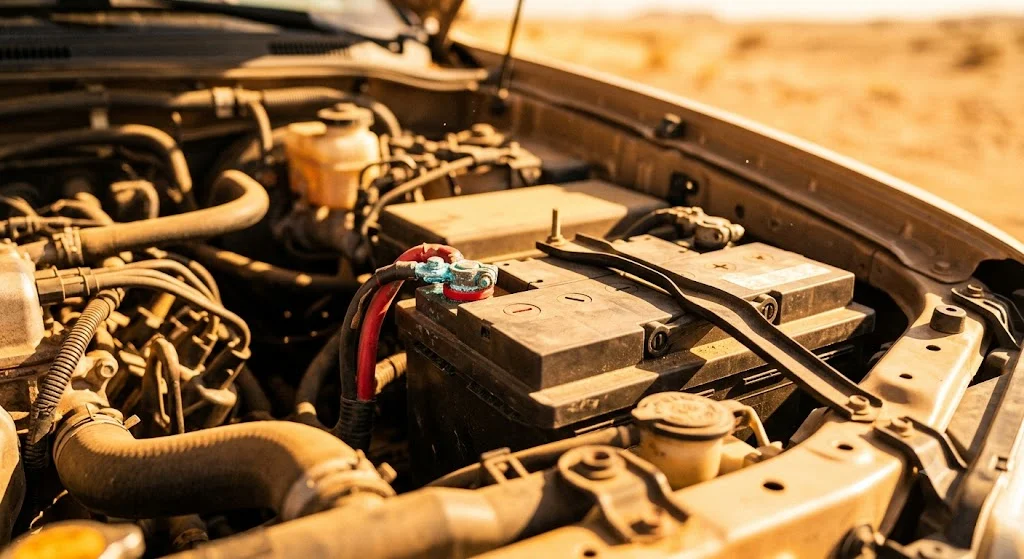
Open the hood from time to time and visually inspect the battery. Look for white or greenish deposits around the terminals, loose wires, or a mounting bracket that isn't secure.
Deposits can prevent electrical current from flowing efficiently, while a poorly secured battery can suffer internal damage from vibration over time. It's best to have a qualified technician clean or remove the terminals if you don't have enough experience, since mishandling the battery can lead to a short circuit or injury.
Reduce electricity use while the car is off
Leaving the lights, sound system, or device chargers running while the engine is off can drain the battery, especially if it's old or already weak.
Before leaving the car, make sure to turn off:
Interior and exterior lights.
The sound system and any additional screens.
Phone chargers and electrical accessories.
Dash cams or any unnecessary devices, unless they're connected to a system that protects the battery from being drained.
You should also have the car inspected if the battery keeps losing its charge repeatedly; the problem could be with the alternator, the charging system, or an abnormal electrical drain, not the battery alone.
Choose a battery that matches your car's specifications
When it's time for a replacement, don't choose a battery based on price or appearance alone. Make sure to check:
The battery's size and dimensions.
The location of the positive and negative terminals.
The electrical capacity (Ah).
The cold cranking amps (CCA).
The recommended battery type.
Its compatibility with the charging system and the automatic start-stop system.
Cars equipped with a Start-Stop system may need AGM or EFB batteries, and it's not recommended to replace them with a conventional battery that isn't designed to withstand repeated start-stop cycles. Installing a battery with the wrong specifications can affect the car's electrical system.
Examples of batteries available on the B2B Auto website include the Start X battery, which comes in multiple options for capacity, size, and cranking power depending on the model, as well as the Battery Black Bull 55559-55AH, with a 12-volt rating and 55-amp capacity. Still, you should first make sure the specifications match your car's requirements, since a battery suitable for a small car may not suit an SUV or a car with many electrical features.
Be ready for emergencies… but don't ignore the root cause
Having a portable jump starter in the car can help you if the battery charge drops, especially while traveling or in remote locations. The B2B Auto website offers devices such as the 16000mAh Jump Starter and Air Compressor and the HZ009C Jump Starter and Air Pump, which combine battery jump-starting with additional emergency functions.
That said, a portable jump starter isn't a fix for a damaged battery or a faulty alternator. After jump-starting the car in an emergency, you should have the battery and charging system checked to find out what caused the problem. The emergency device itself should also be charged and stored according to the manufacturer's instructions, and not exposed to heat beyond its allowed operating and storage limits.
Signs your battery is about to die
Don't ignore these signs:
The engine cranking slowly when starting.
Hearing a clicking sound with no engine response.
Dim lights or erratic electrical systems.
The battery or charging system warning light turning on.
Repeatedly needing to jump-start the car.
A swollen battery case.
An unusual smell resembling sulfur.
If you notice swelling, leakage, or a strong smell, don't try to touch the battery or jump-start it — have it inspected and safely replaced instead.
Conclusion
Kuwait's heat doesn't mean battery damage is unavoidable. Regular inspection, cleaning the terminals, securing the battery properly, reducing short trips, and avoiding electricity use while the engine is off all help you get the longest possible life out of your battery.
And when you need a new battery, don't assume "all batteries are the same." Check your car's manual, and make sure of the size, capacity, battery type, and terminal placement before buying. Making the right choice today can save you an annoying breakdown under Kuwait's sun tomorrow.