10 Tips to Help Your Transmission Last Longer

The transmission is one of the most important and expensive parts of a car, and any major failure in it can mean a repair bill that's far from simple. With summer heat in Kuwait, traffic congestion, and frequent stop-and-go driving, driving habits and maintenance commitment become key factors in protecting it.
The good news is that a lot of unnecessary stress on the transmission can be avoided with simple habits. Here are 10 tips to help extend the life of your transmission and maintain its performance.
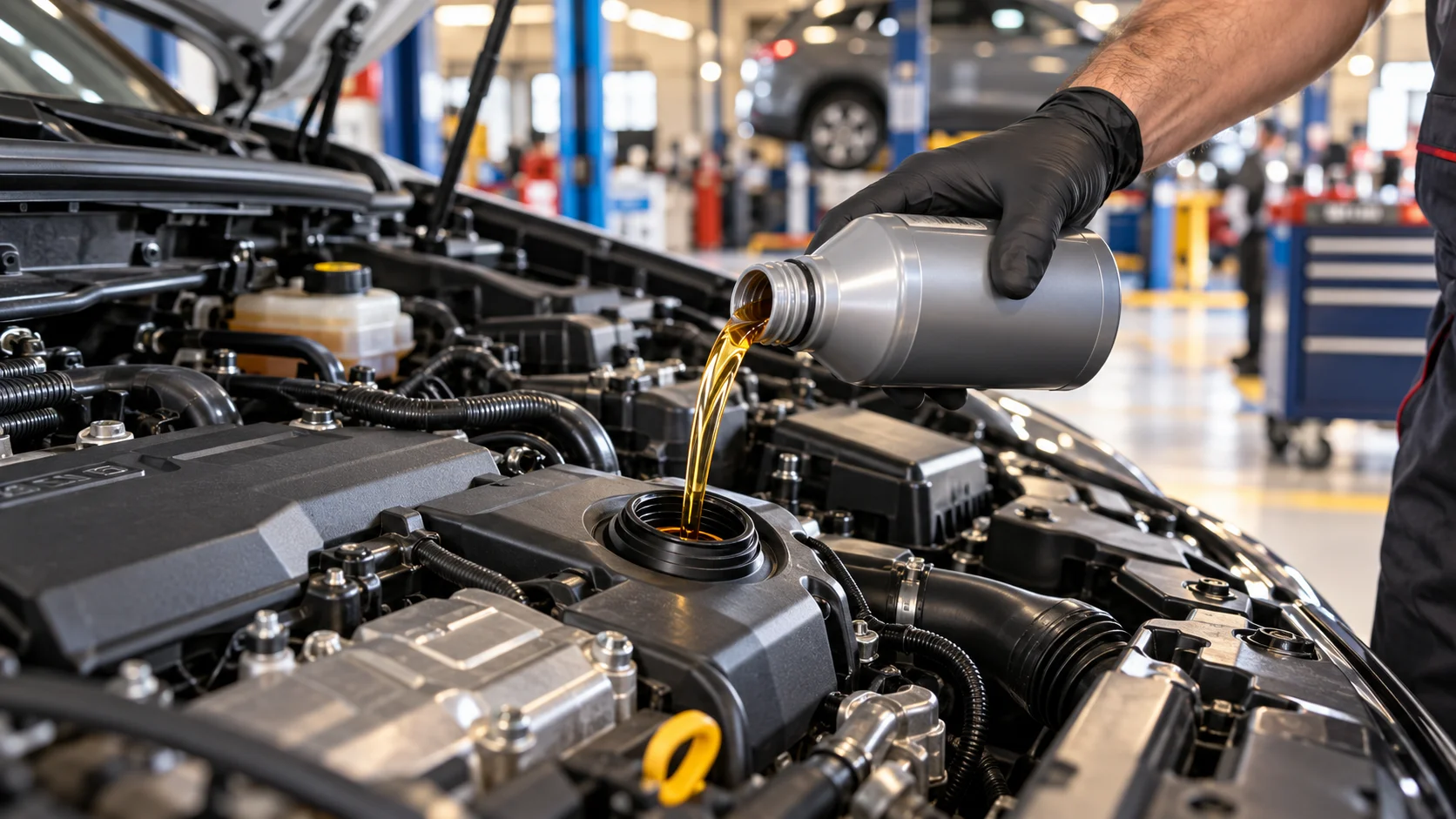
1. Stick to the Transmission Fluid Inspection and Change Schedule
Don't rely on a fixed number you hear from others; the timing for transmission fluid changes varies depending on the manufacturer, transmission type, and usage conditions.
Always refer to the owner's manual and the approved maintenance schedule. Some vehicles may require more frequent maintenance under heavy use, such as frequent towing or intensive driving in traffic and high heat.
2. Use Only the Correct Transmission Fluid Specification
Not every transmission fluid is suitable for every car. There are fluids designed for traditional automatic transmissions (ATF), others for CVT transmissions, plus special specifications for certain DCT types and others.
Using a fluid that doesn't match the specification can lead to vibrations or abnormal performance, and may damage the transmission. Some manufacturers explicitly warn against using a fluid type different from the one specified for the vehicle.
3. Don't Shift Between D and R While the Car Is Moving
One of the habits to avoid most is shifting from D to R or vice versa before the car has come to a complete stop.
Let the car stop, apply the brakes, then select the other direction. Changing the transmission's direction while the car is still moving can place unnecessary strain on its components, and vehicle manuals have warned that this can cause transmission damage.
4. Don't Shift to P Before a Complete Stop
Shifting into P while the car is still moving is a habit that's hazardous to the transmission. Come to a complete stop first, then use park mode.
P is designed to hold the transmission in place while parked, not to stop a car that's still in motion.
5. Don't Rev the Engine While Engaging the Transmission
Avoid raising engine RPM and then shifting from N or P to D or R. It's best to keep your foot on the brake and let the engine be at its normal idle speed while selecting a drive mode.
Engaging the transmission while RPM is elevated puts a sudden load on the drivetrain, and some vehicle manuals explicitly warn against this practice.
6. Ease Up on Frequent Hard Launches
Strong acceleration isn't a problem in itself when the car is used within its intended design, but frequent, aggressive launches increase load and heat inside the drivetrain.
In daily driving, smooth acceleration helps reduce unnecessary stress, especially in frequent traffic.
7. Use the Parking Brake When Parking
Especially when parked on an incline, don't rely on P as the only way to hold the car in place. Use the parking brake as described in your vehicle's manual.
Manufacturer manuals recommend using the parking brake rather than relying on the transmission alone to hold the vehicle in place.
8. Don't Exceed the Vehicle's Towing and Load Capacity
If you use your car to tow a trailer or carry heavy loads, stick to the limits set by the manufacturer.
Heavy loads and towing increase load and heat inside the transmission, so it's important to respect towing capacity and use Tow/Haul mode if your vehicle is equipped with it and driving conditions call for it.
9. Don't Ignore Transmission Temperature
Heat is one of the key factors affecting transmission performance and lifespan, which is why modern cars include warning and protection systems for high transmission fluid temperature.
If a message like "Transmission Oil Temp High" appears, don't keep driving as if nothing happened. Follow the on-screen instructions and your owner's manual; some systems require you to slow down or pull over safely.
This deserves extra attention during Kuwaiti summers, especially with traffic, heavy loads, and long-distance travel.
10. Don't Delay Checking Warning Signs
If you start noticing delayed shifting, unusual jerking, vibration, strange noises, transmission slipping, or RPM rising without matching acceleration, don't wait for the problem to get worse.
Early inspection can catch a simple issue with fluid, a leak, or a related system before it turns into a much bigger repair.
Conclusion: Your Transmission Thrives on Maintenance and Calm Driving
Extending your transmission's life doesn't require complicated tricks; the basics are using the correct transmission fluid, following the maintenance schedule, avoiding direction changes while moving, monitoring temperature, and not ignoring warning signs.
And in Kuwait's climate, where heat and traffic are part of daily driving, these habits become even more important. Most importantly: never use any fluid or additive in the transmission just because it's available; always confirm the specification set by your vehicle's manufacturer first.